
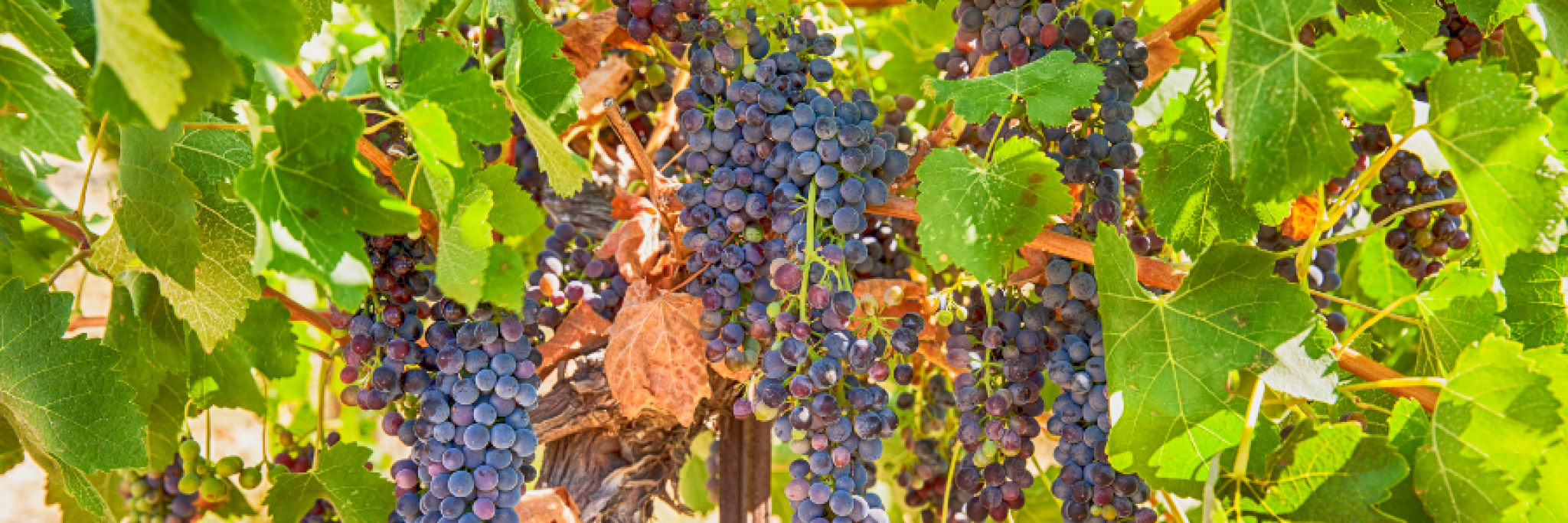
Syrah – the French, Shiraz – the Australian - is one of the most popular black/red varietal/wines in the world today – in the New World it is the second most planted black grape after Cabernet Sauvignon for example; overall, the fourth most planted black variety in the world, and is in the top 10 of all varieties planted (white and black). Its spiritual home is the North Rhône Valley, but maybe not its origin. It is probably Australia that has done more than any other country to promote and elevate the variety to the level of popularity it now enjoys.
Legend also has it that its origins were linked to a “Shirazi” wine produced in the then capital of Persian – Shiraz – which was in turn brought to the Rhône. There are also early references in Australia to it being called “Scyras” as well as “Hermitage” after the fame of the red wine made in that delimited North Rhône vineyard.
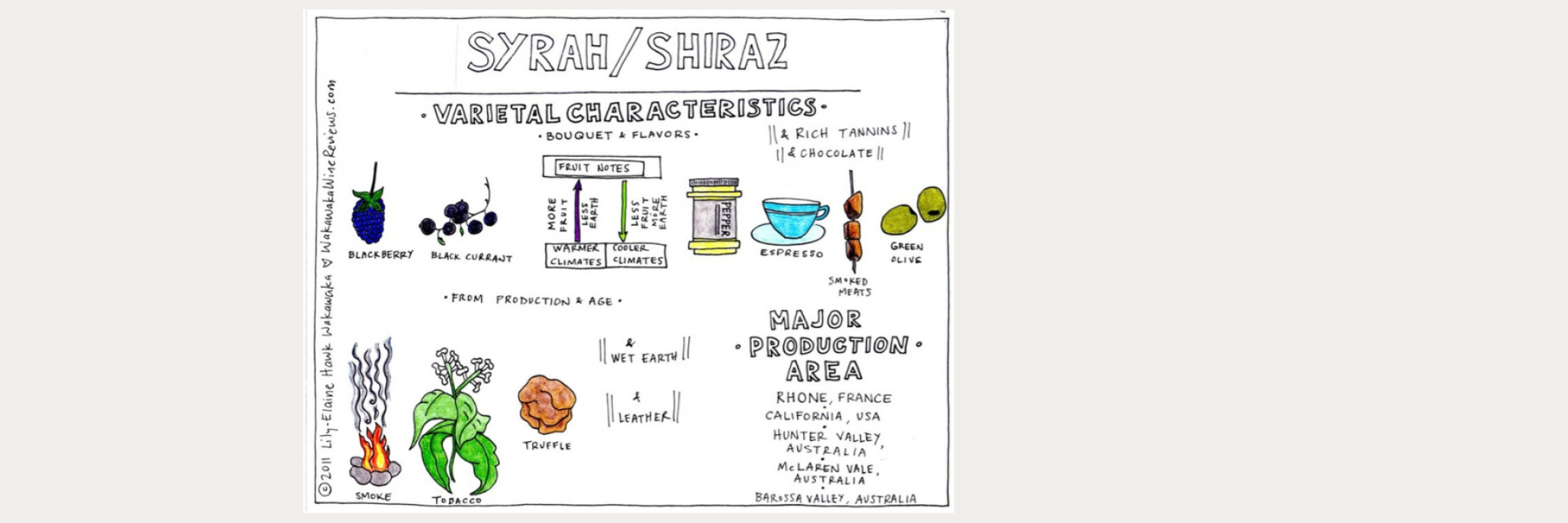
Syrah’s CV:
- Requires moderate to hot growing and ripening conditions
- Dark skinned, deeply coloured
- Medium to High Tannins
- Medium + acidity (warm climate, eg Barossa Valley Australia) to high acidity (North Rhône)
- Medium + to Full Bodied
- Most examples are oak aged but with less use of, and time spent in, new oak. In Australia many producers prefer to use American oak as they like the vanilla, and coconut notes this oak gives and feel they complement the Australian style of Shiraz (v the North Rhône where French oak dominates)
- Potentially very long lived in bottle – 25+ years capacity with ease in the best vintages from top sites
What makes Syrah/Shiraz so popular is frankly it is just so easy and satisfying to drink! Aromas and flavours of blackberry, olives, toast, game, liquorice abound with that lovely cracked black pepper note in good examples, and plenty of body but not the searing levels of tannins and acidity you can find in young Cabernet Sauvignon for example. It is also disarmingly easy to drink when young. For many it is a classic BBQ wine to have in the summer months with robust chargrilled cooking.
North Rhône and Australian Syrah/Shiraz – the Links and the Differences
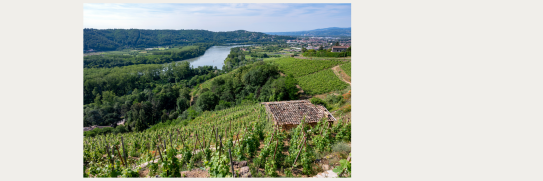
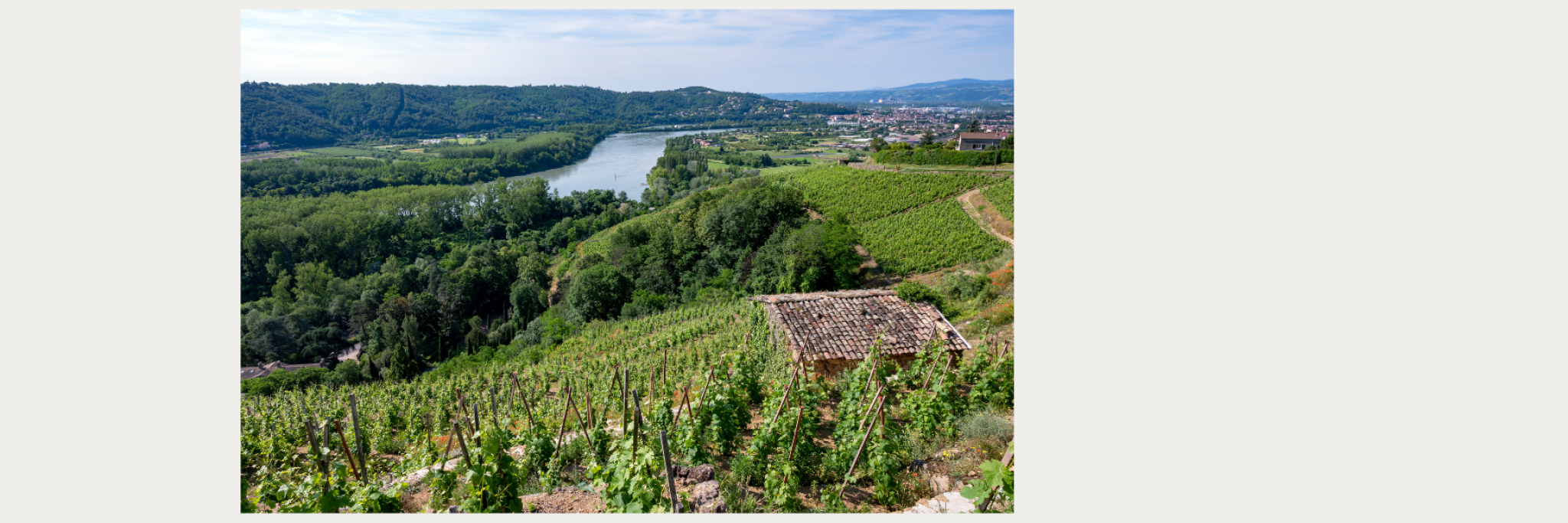
The paradox is that North Rhône red wines are not allowed to put the variety name Syrah on the front label of their appellation wines, whilst bulk, generic Syrah wines made in the South of France (eg Pays d’Oc) not only have the option to label by the variety but can also adopt the Australian “Shiraz” on the front label should they wish!
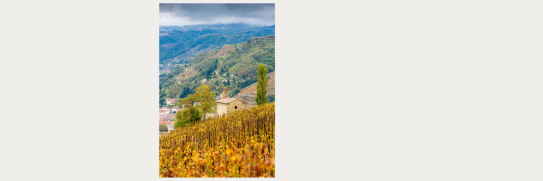
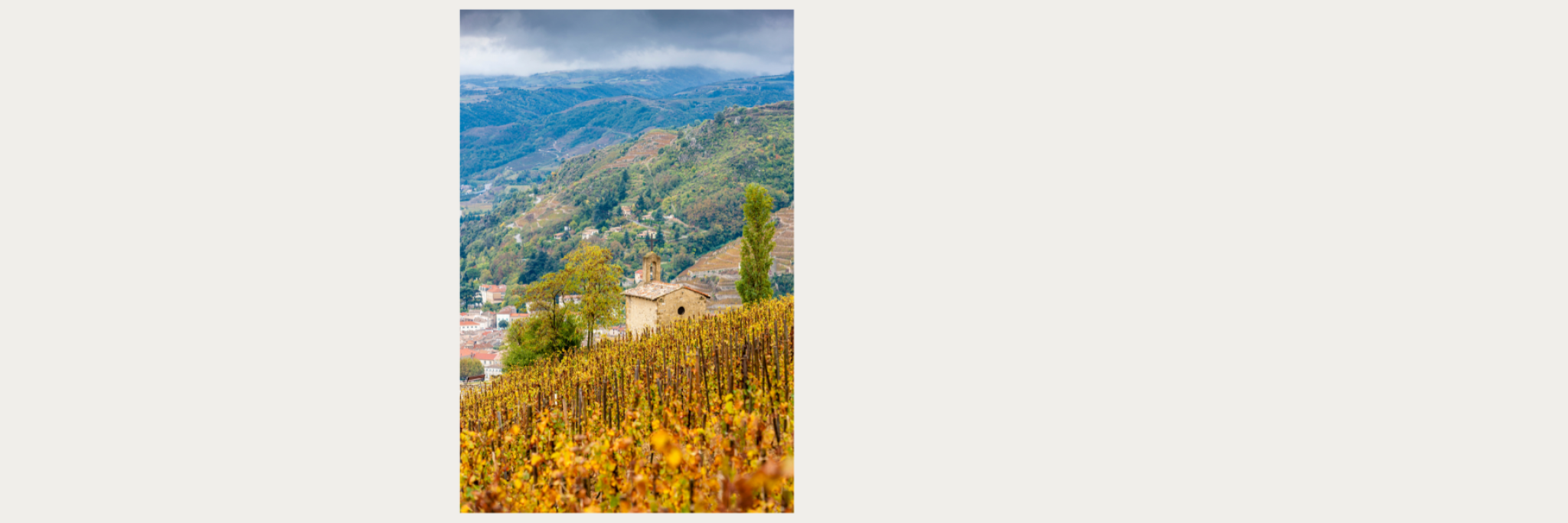
And the famous granite hill of Hermitage – in the North Rhône - Syrah’s spiritual home, with the iconic chapel
The “Hermitage” Phenomenon
Hermitage is one of the oldest wine growing areas in the world. The wines come from the tiny granite Hermitage hill, which rises above the rather plain town of Tain l’Hermitage in the North Rhône (also home to the famous Valrhona chocolate factory). Vines have been in and around this area from 600 BC. The Romans also planted vines in the region when they used it as an outpost.
The region eventually changed its name to Hermitage at some point during the 17th century. By the 1600’s, “Hermitage” became the official wine of King Louis XIII. By the early 1700’s the wines of Hermitage were sold for as much, or more, money than any other wine in the world. Hermitage (both white and red) was one of the favourite wines of Thomas Jefferson, the third President of the United States.
It was formally delimited as an appellation in 1936. Of all the 8 Appellations in the North Rhône (Hermitage – along with Côte-Rôtie remains the finest and most sort after) all other reds must be made from 100% Syrah. Both Hermitage and Côte-Rôtie are allowed to blend up to 15-20% Viognier into the wine. I do not know of any Hermitage producer though that does this these days but many in Côte-Rôtie do – but usually to levels around 5%.
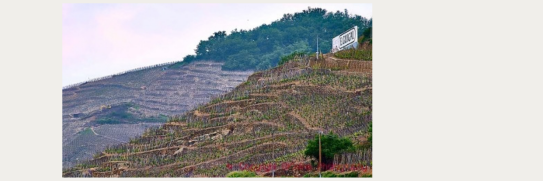
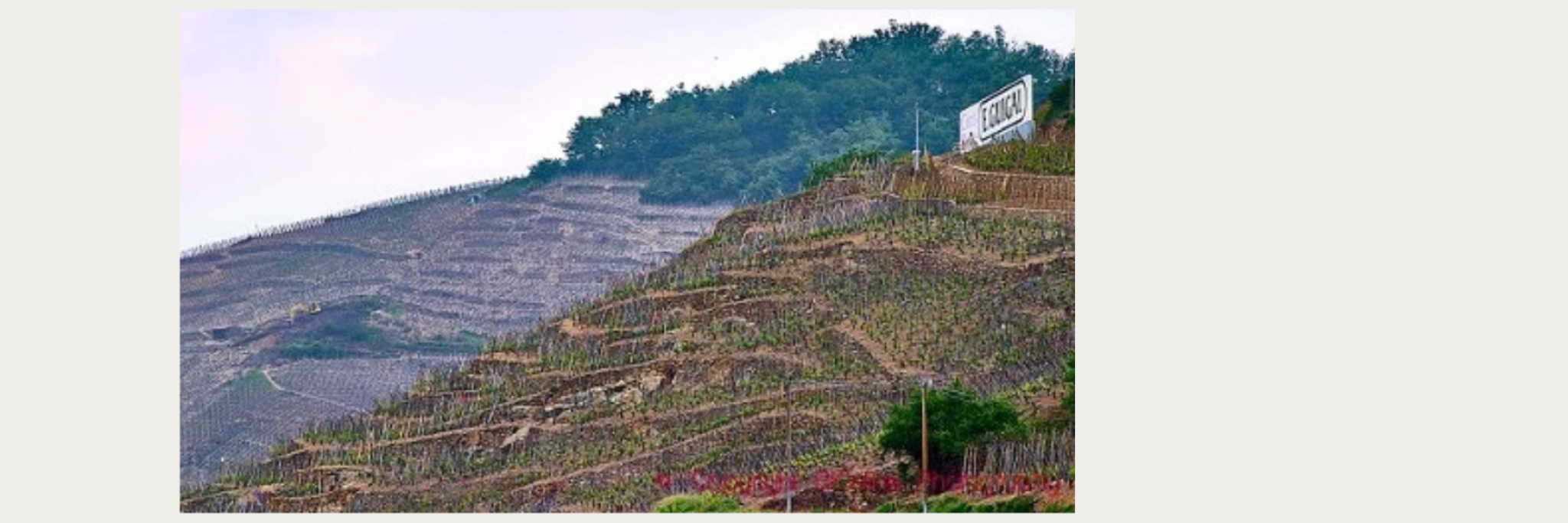
Syrah on the steep Côte-Rôtie (“roasted hills”) – the other great appellation and rival to Hermitage. Here at Guigal – for many the greatest producer, traditionally trained on upright poles/stakes
In the Southern Rhône Syrah takes a supportive role – rarely seen as a single varietal but regularly used in the blend – usually alongside Grenache and Mourvèdre, most classically in the regions of Châteauneuf-du-Pape and Côtes-du-Rhône.
The wines below make a great contrast and showcase well the difference between the North and the South of the region. In the Réserve de Fleur the Syrah element gives that pepper and spice kick to marry with the soft red fruits of the Grenache. By contrast, the Côte-Rôtie from iconic producer Guigal exemplifies the pedigree and sheer intensity of unbridle Syrah – very fine with concentrated notes of blackberry, olives, game, and pepper – a classic.
https://petergrahamwines.com/p/20-cotes-du-rhone-reserve-de-fleur
https://petergrahamwines.com/p/17-cote-rotie-brune-et-blonde-e-guigal
The Classic Australian Style
It is interesting to note that Australia and especially in the Barossa have not only the oldest plantings of Syrah in the world but the oldest vines of any variety – some have been recorded as 180 years old and still producing fruit!
Shiraz in Australia
The Shiraz grape is most strongly associated with this country than any other variety.
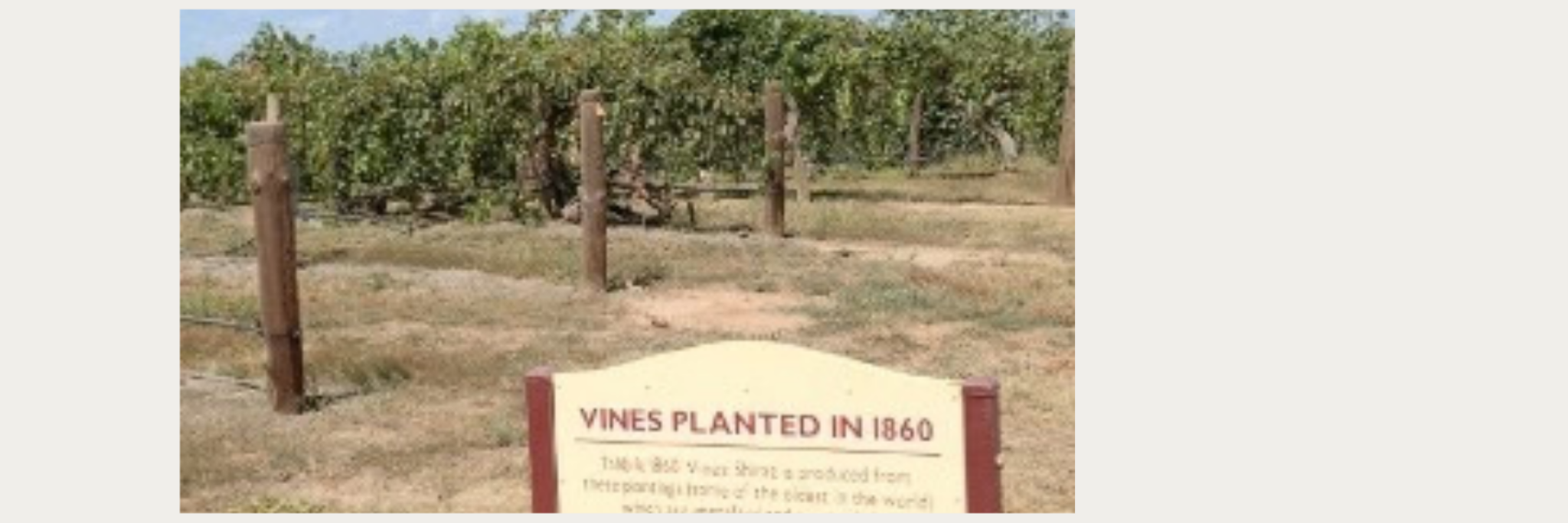
In 1831, Scotsman James Busby, often referred to as "the Father of Australian viticulture”, travelled to Europe and brought back numerous cuttings including Syrah. The cuttings were planted in the Botanical Gardens in Sydney. From these the first plantings in the Barossa Valley were made in 1843; Tahbilk in Victoria has plantings dating back to 1860 and many famous Shiraz regions – such as The Hunter Valley, Clare Valley, Eden/Barossa Valley, McLaren Vale, and Langhorne have plantings over 100 years old. And areas such as Western Australia and Heathcote in Victoria are also building reputations.
By the 1860s Syrah was being widely planted in Australian vineyards, taking to the much warmer climate to produce high quality and highly individual styles which to this day bears little resemblance to the classic North Rhône profile. Today Shiraz is the single most important varietal in the country and accounts for plantings of over 50,000 hectares – nearly 50% of the total plantings by any variety in the country!
The style of Shiraz in Australia is completely different to that in the Rhône. Black fruit flavours are riper and more intense, juicy, often smoky and meaty with notes of liquorice – and many winemakers lean towards the more vanilla notes of American over French oak. Both the Rhône and Australian styles are delicious – just different – which is what makes this varietal so exciting.
Have a look at the two wines below – Yalumba are a long established and highly respected Barossa Valley producer, still family owned, and renowned for high quality “punchy” Barossa Shiraz styling. By contrast Clare Valley specialist Wakefield showcases the cooler Clare Valley style with accentuated pepper notes and hint of chocolate
https://petergrahamwines.com/p/yalumba-samuels-collection-barossa-shiraz
https://petergrahamwines.com/p/estate-shiraz-wakefield-wines
Other Areas and Rising Stars for Syrah/Shiraz
Europe
Plantings in the South of France have risen significantly – being made as both single varietal in the Pays d’Oc and in blends (with varieties such as Grenache, Carignan and Mourvèdre) in delimited areas in Languedoc-Roussillon. In these areas too you can find examples of Syrah being a component in Rosé wines.
Pockets of plantings of Syrah are increasing in Spain (eg Catalunya) and Italy (eg Tuscany, Sicily) – and has been a long-standing planting in the South of Portugal (especially the Alentejo)
New World
Plantings have really increased dramatically here and stand outs include:
- New Zealand – especially the Gimblett Gravels sub district of Hawkes Bay in the Northern Island which is building a strong reputation for Syrah more in the Rhône style – please see below
- South Africa – inland areas such as Stellenbosch, Swartland, and Paarl
- Chile – including Central Valley areas but also cooler climate regions such as Casablanca Valley where more elegant “North Rhône” styles are emerging.
- USA – especially inland California areas such as Napa Valley, Santa Cruz, Mendocino. This State christened the term “Rhône Rangers” some years ago
Do try the Craggy Range example – high-quality specialist Syrah producers from Gimblett Gravels
https://petergrahamwines.com/p/craggy-range-hawkes-bay-le-sol-syrah


