


This is the second in a series of blogs which will look at mainstream and commercially very important wines for the majority of On Trade wine lists with some background and insight into what they are, and what they represent – both for the trade and the consumer.
In 2024 Prosecco production reached an all-time high when 660 million bottles were made and of these 114 million were exported to the UK – so over 20% of their total output. It is vitally important to both the Off and especially the On Trades and it is hard to think of any On Trade wine list in the country which does not list at least one Prosecco. So, what is Prosecco, how has this come about, and how best to serve and promote the drink in your outlet. And please find a link below to Peter Graham Wines Prosecco portfolio.
Prosecco Summary Snapshot
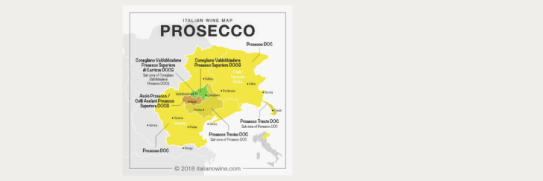
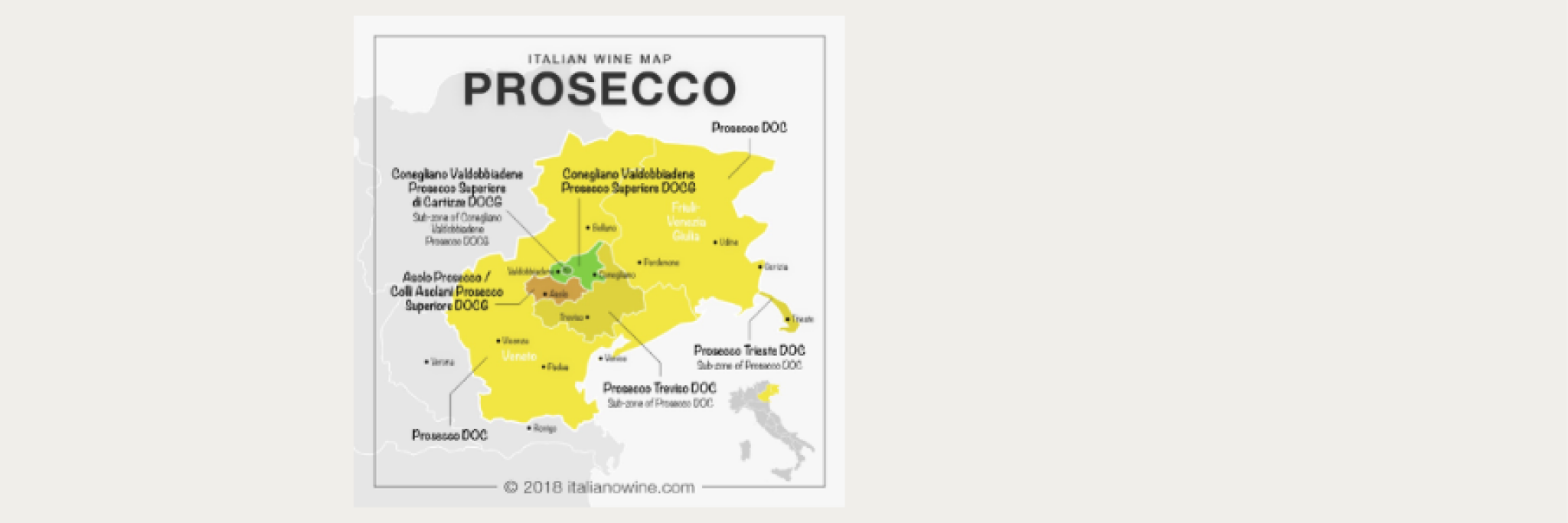
- Comes from two main regions in the Northeast of Italy – Veneto and Friuli-Venezia Giulia – please see map
- The DOC Prosecco was formally recognised in 2009
- There is a “Superiore” DOCG category (which has a strip across the top of the bottle) comes from the premium vineyard sites between Conegliano and Valdobbiadene. In the heart of this area is the finest of all locations – a Prosecco “Grand Cru” in effect – the delimited area of Cartizze
- There are over 28,000 hectares planted, mainly of the Glera grape which must make up a minimum of 85% of the blend of Prosecco – most top Prosecco are 100% Glera but 5 other Italian grapes are allowed in the blend; and lately Champagne grapes Chardonnay and Pinot Noir are also permitted in that other 15%
- There are more than 12,000 growers and 1,000 producers, with 362 wineries
- Soils are mainly calcareous with a mix of sand and stones
- 77% of production is fully sparkling Spumante style, and 14% gently sparkling Frizzante – both White, 9% and increasing is Rosé, and there is a microscopic amount of still Prosecco made, out of interest
- 61% is classed as “Extra Dry” and 34% “Brut” – more about that later
- Around 7% and increasing is Organic
- If a Vintage is stated on the label, it must be a minimum of 85% of grapes from that year
- For Rosé the blend must be Glera with a minimum of 10% to up to 15% Pinot Noir (Nero) – 59% is “Extra Dry” and 41% “Brut, including “Extra” and” Nature”
- White Prosecco is made from destemmed grapes, with a 30 day minimum secondary fermentation in stainless steel tanks (more about that to follow); Rosé must have a minimum of 60 days secondary fermentation
Tank Method (Charmat)
Virtually all Prosecco is tank fermented which is why the character of the wine ((versus bottle fermented examples) is all about upfront fruitiness and freshness and none of the yeasty or brioche notes of a lees aged bottled fermented example. In simple terms this is what sets Prosecco apart – as well as its origin and grape of course.


With a tank fermented sparkling wine the processing is akin to bottle fermenting in that an addition of sugar and yeast is made to a base wine to start a secondary fermentation – but this time in a large, sealed, stainless steel tank. The other aspect which is fundamentally different is that once the secondary fermentation is complete there is no desire for any extended lees contact with the finished wine. It is all about the freshness and fruitiness of the wine (now sparkling), not any autolytic bready character. In addition, the wine can be filtered quickly off dead lees under pressure into a bottle, so it is much quicker and more cost effective than bottle fermenting, with its extended aging programmes followed by disgorging and packaging.
Italy Specifically
Italy has a long tradition of making sparkling wine - and in several regions. As we know Prosecco is now the most popular sparkling wine in the UK and the majority is made by tank fermenting. A good Prosecco is all about up front fruit flavours, refreshing, and creamy easy drinking style with notes of apple, pear and maybe lemon. And in most cases quite light on the alcohol at between 10.5-11.5%
Since 2020, you can now also enjoy Prosecco Rosé, from the inclusion of a small amount of Pinot Noir for the colour.
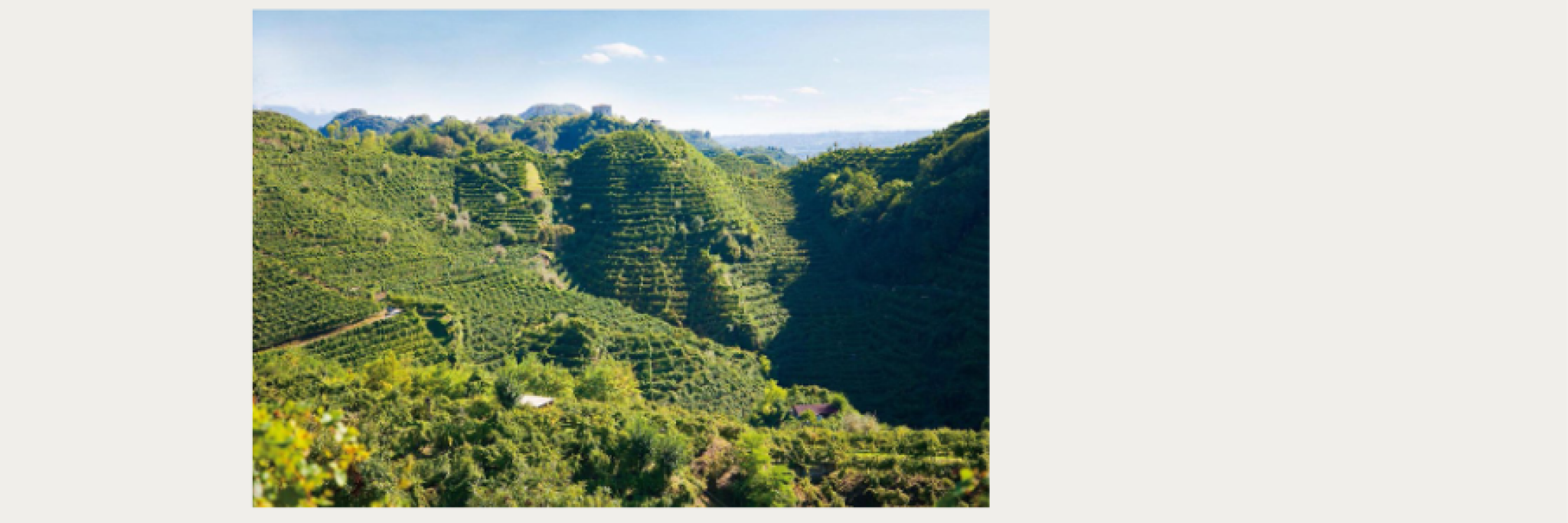
The Amazing Cartizze Vineyard in Valdobbiadene sub region of Prosecco – the superior, delimited area
The “Sweetness” in Prosecco
You may have also noticed there is also a sort of “softness” to many Proseccos – an off-dry character - this is because many are sold in the oxymoron labelling of “Extra Dry” – which by law contain 12-17g/lt residual sugar. This is some 3-6 g/lt higher than many “Brut” Champagne to put into context. Glera also has naturally lower levels of acidity than the Champagne grapes which accentuate this feeling of softness – and with it frankly makes it very easy to drink!
The labelling laws for Prosecco styles are:
- Brut Nature 0-3g/lt
- Extra Brut 0-6g/lt
- Brut 6-12g/lt
- Extra Dry 12-17g/lt
- Dry 17-32g/lt
- Demi-Sec 32-50g/lt (rarely seen by the way)
Prosecco, Consumers, Wine Lists – Serving Options
Prosecco, as a brand name, is instantly recognisable to most UK wine drinkers and its general association is with relaxed, unpretentious, casual and social drinking, as well as a celebratory drink. Its quality to price ratio makes it an easy sell and its more-ish nature means one glass usually leads to the purchase of another.
The introduction of the Rosé style and label has helped to refresh the brand and add another sales dimension. There is little evidence, though, of consumer understanding of the different levels and quality stratums of Prosecco. There may even be an argument that some (maybe more “discerning” drinkers) can look down on Prosecco in a somewhat snobbish way.
But there is no evidence in the market that sales are slowing down in any way, but equally it can be said that there are some poor and rather dilute examples of Prosecco in the market which longer term will do the category no favours. Numerous suppliers and producers have also responded to the new duty rises and structuring of duty to source Prosecco of a lower abv - eg 10-10.5%, so style variances may become more marked and consumers may take note. Such is its popularity that I feel there is scope to pour more than one Prosecco by the glass – and by that not just the white and rosé versions.
Above all it is usually drunk on its own as an apéritif with limited consideration in the On Trade for matching with foods and dishes. This could be seen as a missed opportunity not only to sell more but build its brand equity amongst consumers.
Those who are starting to look at Prosecco as a serious food partner as well as social drink have identified several foods items which work particularly well with the drink – please find a small selection below for consideration for your menus.
- Sushi – especially
- Shellfish scampi whitebait
- Seafood in general
- Asian cooking (soft spice)
- Avocado
- Charcuterie
- Poultry
Finally, I would just like to highlight three examples from the PGW list. The Vispo Allegro offer superb value for money and ticks all the stylistic boxes for a house pourer Prosecco – and neatly packaged. The Organic Fiori di Campo is a nice step up with bright fruit and a creamy mousse. Finally, and with summer drinking in mind, the Rosé Le Dolci Colline showcases the red berry and soft red fruits leaning with this style. I would certainly look at offering a white and rosé by the glass if you are not already doing so.
https://petergrahamwines.com/p/prosecco-vispo-allegro
https://petergrahamwines.com/p/fiori-di-campo-prosecco-spumante-organic
https://petergrahamwines.com/p/20-le-dolci-colline-prosecco-rose


