This is the first in a series of blogs which will look at mainstream and commercially very important wines for the majority of On Trade wine lists with some background and insight into what they are, and what they represent – both for the trade and the consumer.
“I don’t like Chardonnay, but I like Chablis” – a statement which I hear trade people recite on a regular basis from their customers; yes, an oxymoron but paradoxically logical. What people mean is they don ‘t like the big, oaky, buttery style of Chardonnay but the crisper, cleaner, unoaked, apple and citrus character of a good Chablis. Why is this so and what does this say about modern drinking styles? And what is or makes a good Chablis. Quite simply, at its best, Chablis is the purest expression of the Chardonnay grape on the planet. And in that regard, it is quite different to other white Burgundies (except maybe for the Chalonnaise) as these are mainly barrel fermented and aged and the vineyards are that degree or so warmer further south.
I will also, as usual, highlight some standouts from the Peter Graham Chablis portfolio later.
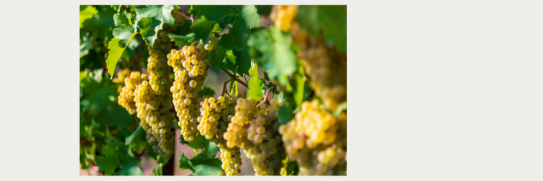
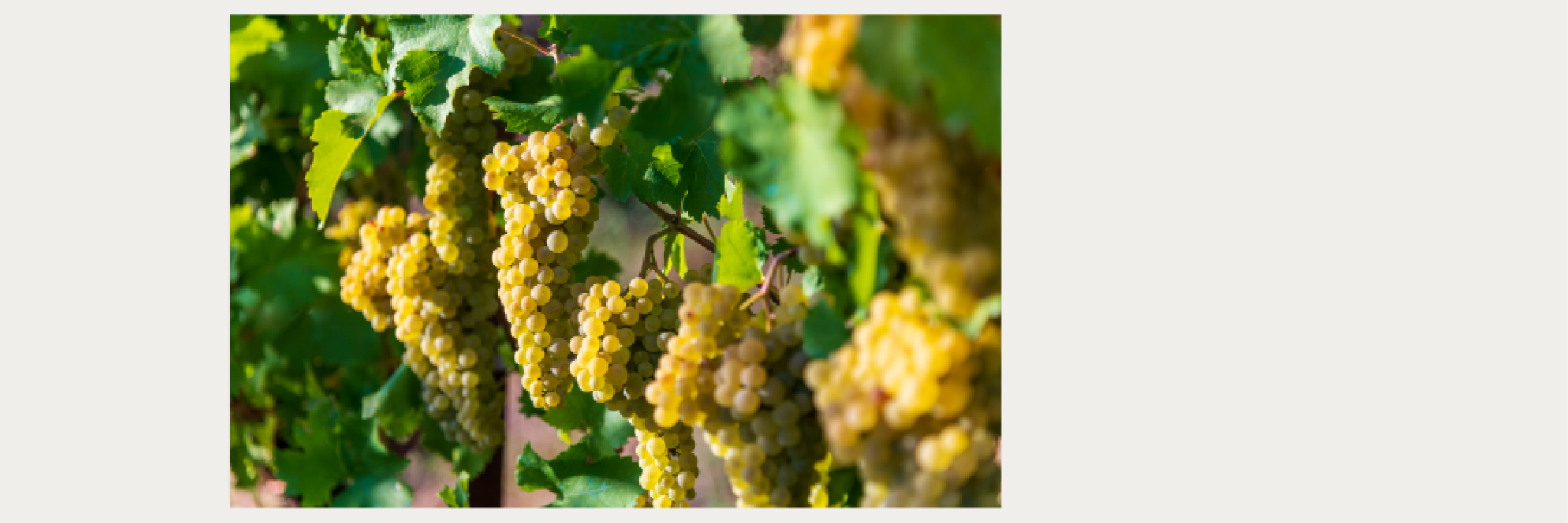
Chardonnay
The first recorded planting of vines in Chablis was by Cistercian monks in 1114 who planted what was believed to be Chardonnay along the river Serein and at Pontigny Abbey. The region then became part of the Duchy of Burgundy in the 15th Century. Due to its location, they had easy river access to the lucrative Paris and, in turn, the UK market.
By the 19th century there were nearly 40,000 hectares of vines planted in the then “Chablis” but like all other regions in France they were devastated by the Phylloxera infestation combined with the widespread Oidium outbreak. Many gave up and although the AOC was formally confirmed in 1938 incredibly by the 1950s there were only 500 hectares planted!
Today, there are 6,000 hectares under vine with 365 Domaine estates and 1 huge cooperative which account for nearly 25% of all production. Such is the popularity for Chablis these days that exports account for 67% of sales. There are four formal geographic and qualitative grades of Chablis:
- Petit Chablis – accounting for 20.5% of production
- Village – 65%
- Premier Crus – 13%
- Grand Cru – 1.5%
The Key Factors Which Make Chablis Unique
Apart from production methods there are two main factors which influence the wine’s style – climate and soil type.
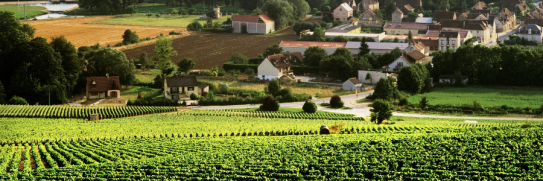
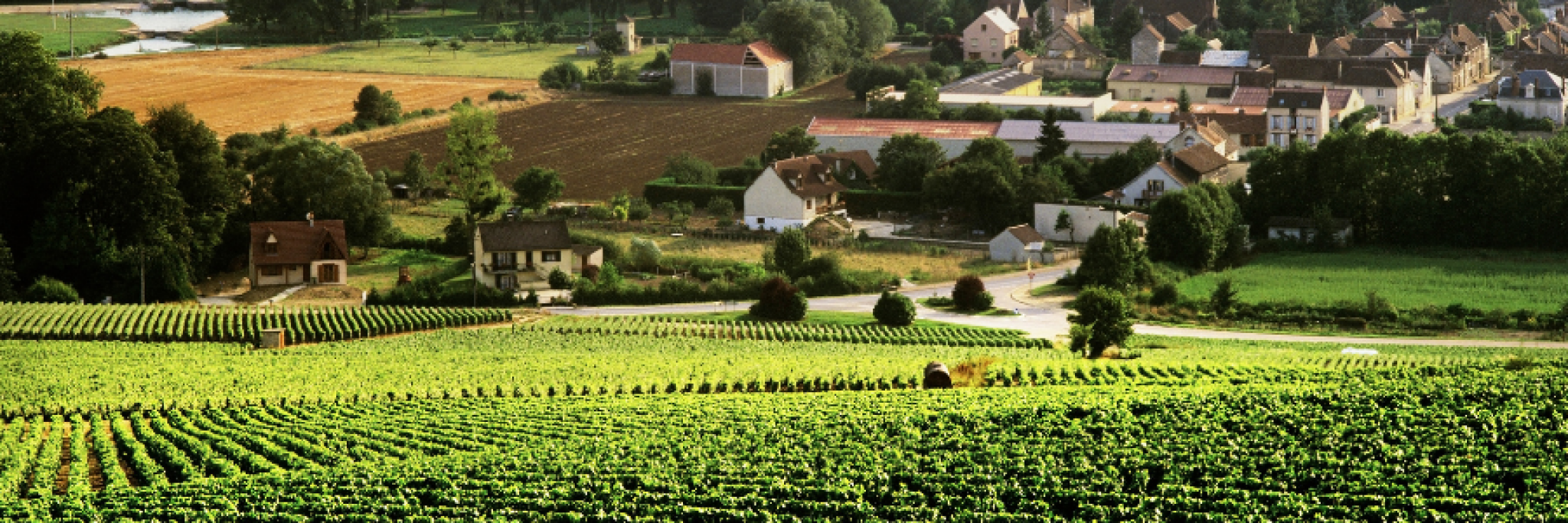
The region is one of France’s most northerly and coolest growing areas – Champagne (which it is closer to than the rest of Burgundy) is the only other one further north. This is why unlike the rest of Burgundy it only grows white grapes ie Chardonnay. This results in grapes which have a naturally high level of acidity which gives Chablis its classical crispness and notes of apple. It also results in relatively lower sugar – and therefore alcohol – levels in the finished wine. With this, though, comes the constant threat if late spring frosts which can devastate the newly budding vines – as in 2021.
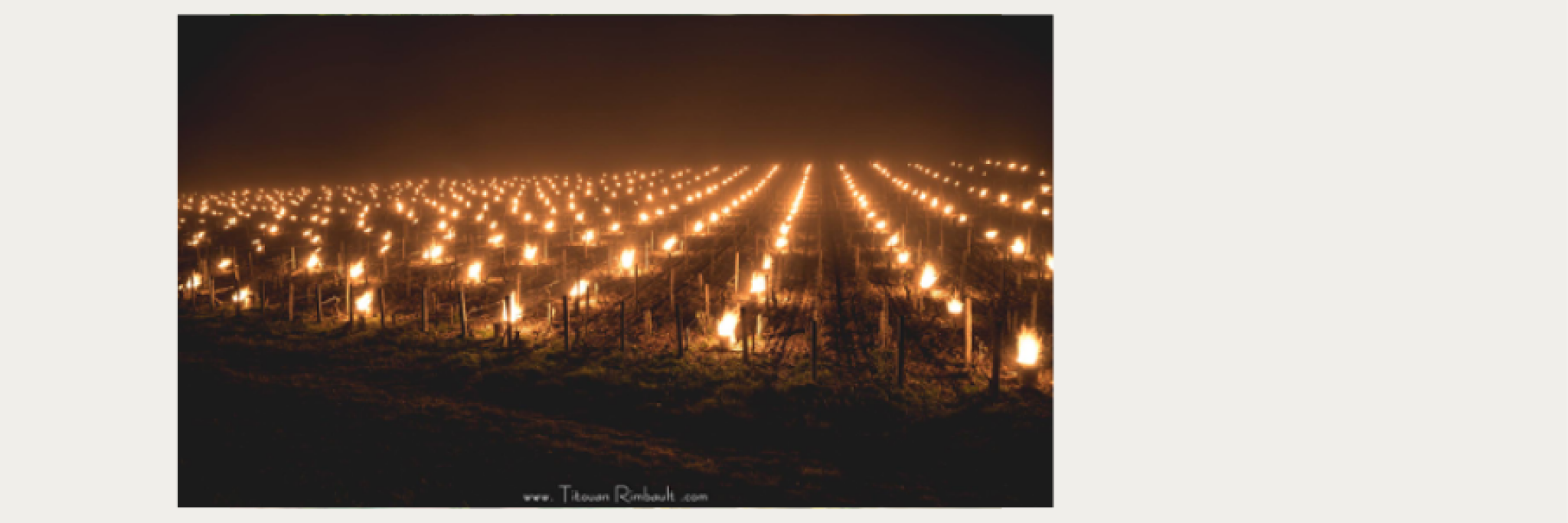
Chablis – anti-frost measures in April 2021 – frosts were devastating in this year resulting in a loss of over 85% of the crop for some producers. In 1957 the frosts were so hard that it was reported that only 132 bottles of wine were produced!
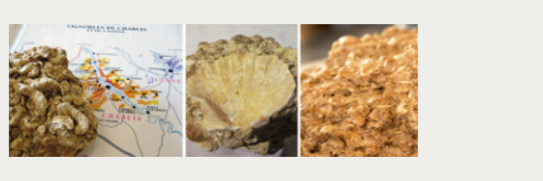
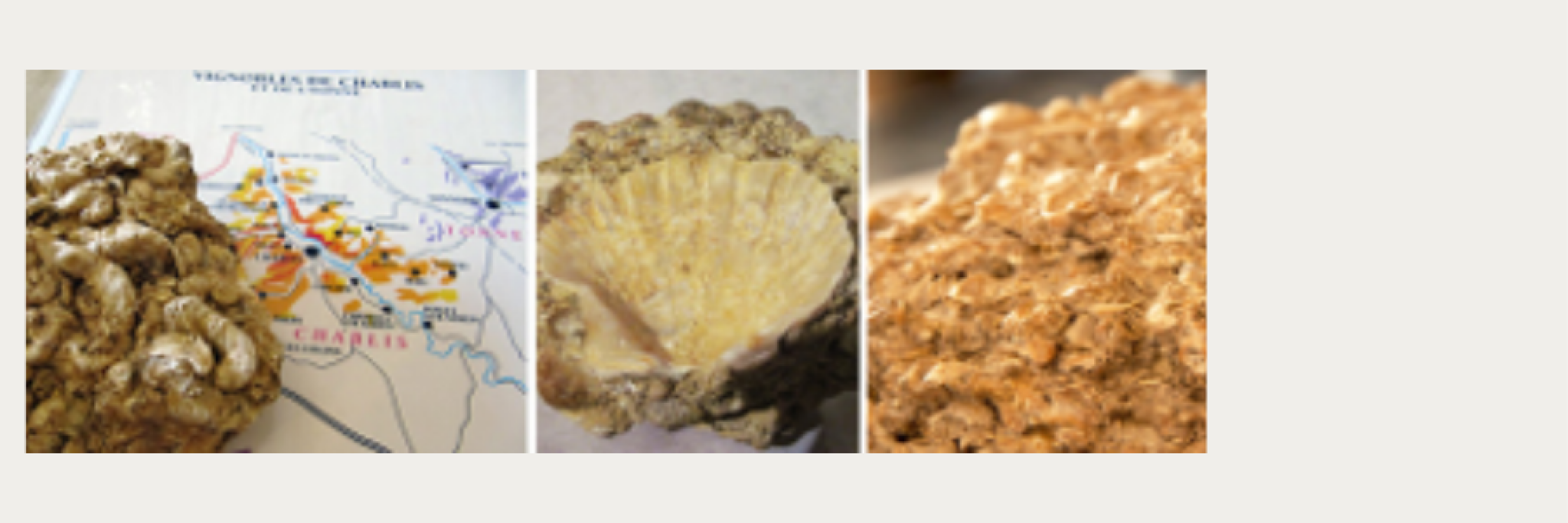
The famous mineral soils of Chablis including the fossilised remains of shellfish
The area is noted too for its specific soil type referred to as Kimmeridge Clay (limestone and clay), but which also contains high levels of chalk, the same seam is linked to both Champagne and English South Downs soil types. The soils are characterised by deposits of fossilised marine life and many in Chablis believe this contributes to the “flinty” and mineral nature which makes Chablis so different to other white Burgundy – although others argue that this has as much to do with the unoaked and above all lees aging regime in what is often a reductive environment. The added benefit of this soil type is that it is very friable – which is useful for efficient drainage in an area prone to damp conditions.
Winemaking
The Burgundy region was famous for its white wines not only for the quality of Chardonnay but that they perfected the barrel fermented and lees aging style too alongside the grape – at best exampled in regions such as Meursault, Puligny and Chassagne-Montrachet which became world standard bearers.
Chablis, by contrast, has always shunned the barrel fermented element (not the lees aging (or malolactic fermentation as further south)) – especially at Petit and Village level and with the majority of Premier Crus too. There is sometimes a barrel element in the Grand Cru wines but even here it is often modest and very much in the background. Why is this?
Because Chablis so much further north and cooler the purity of the fruit profile of Chardonnay is so precise that producers believe this is best expressed uncluttered by oak and in doing so they have defined the Chablis style in the world stage. The lees aging element is then even more elevated which contributes to its “mineral” style and the effect of the malolactic is to temper the naturally high acid levels and improve the wines’ balance. Result: the purist expression of the Chardonnay grape on the planet.
As mentioned, the area (Village) was formally designated in 1938, and the lesser expanded appellation of Petit Chablis was established in 1944 (this is the area where the Kimmeridge soil is less concentrated). There are 40 Premier Crus of which 17 are seen as the principal and best climats. The best sites enjoy a south westerly exposure and for many, Montée de Tonnerre (to the right of the Grand Cru slope) is considered to make the finest Premier Cru example. Producers are allowed to blend Premiers Crus together should they wish.
Other top Premier Cru vineyards include:
- Beauroy
- Butteaux
- Fourchaume
- Monte de Milieu
- Montmains
- Vaillons
- Vaucoupin
- Vaulorent
- Vosgros
There is one Grand Cru (just 100 hectares) split into 7 smaller sites of which Les Clos is considered to produce the finest expression in the hands of top producers. Rules and regulations, such as maximum yields, are applied by the authorities with – no surprise – the most stringent applied to the Grand Cru. These are the few wines at this level in Chablis which will incorporate some oak fermentation and aging but, in my experience, it is always low key and subtle – more as a framework and for texture than overt oak aromas or flavours. Even then some producers refute oak even for Grand Cru (eg Louis Michel) whilst others who use a lot (eg Raveneau) it is all old wood. At their best Grand Cru Chablis is the finest expression of the commune and one of Burgundy’s greatest white wines.
Recent Vintages and Aging Chablis
Chablis suffered terribly in 2021 when hit by intensive April frosts, but the resultant wines were classically crisp, mineral, steely, and intense - there was just not much of it! But both 2022 and 2023 saw the region recover in terms of both quantity and quality – 2022 was a particularly warm year so they are more exuberant fruit wise but still that Chablis “tension”. 2020 was not dissimilar to 2022 and 2023 a cross between 2021 and 22. 2024 is shaping up well with volumes down somewhat but beautifully balanced and mineral styles were made. Before this decade the standout modern year is 2018 which is perfectly balanced in all regards with complexity, vitality, and mineral notes.
In general, all Petit and Village Chablis are ready to drink the minute they are released but from good producers in good years will age nicely for a good 3-5 years. Likewise with Premier Crus you can drink almost straight away, but 3-8 years is the ideal drinking window. For Grand Crus their aging capacity can extend beyond 10 years and with his they get more savoury and nuttier in style. Overall, though, the mantra is enjoy Chablis young with all its vitality and exuberance.
Pricing – and By the Glass Option
I am sure you are aware that, these days, classic Burgundy – both white and red – can be eye wateringly expensive. World white icons such as Meursault, Puligny and Chassagne-Montrachet are now out of reach of many consumers. However, Chablis – especially at Petit, Village, and even at some Premier Cru levels - is not. It therefore remains a viable option not only for any professional wine list but by the glass offering too.
Food Pairing
Chablis works classically well with seafood and especially shellfish but any other light dishes including white meats and most vegetarian dishes. And it remains an excellent aperitif white wine to go with canapés and nibbles.
In summary, Chablis, for all its tradition, has its style almost dictated to it by the growing conditions, soil type, and how producers have adapted that into a formula over the years. The result is a classically styled wine that now, more than ever, would appeal to drinkers looking for fresh, fruity, unoaked, and moderate alcohol levels – even if they “don’t like Chardonnay”.
Peter Graham Selection
A neat quartet to highlight starting with a new listing a Petit Chablis from Tremblay – a perfect option and style for by the glass. Peter Graham have followed Domaine Fèvre for many years and they are broadly acknowledged as one of the finest estates in the appellation and maintain a classical Chablis style throughout their portfolio. The Village Chablis is benchmark and again a wine by the glass option. The Premier Cru Vaillons is a step up in concentration and definition a very fine example. If you would like a style with a touch more ripeness of fruit – by that a touch of stone fruit, try the Village Chablis from Domaine de la Motte
https://petergrahamwines.com/p/tremblay-petit-chablis
https://petergrahamwines.com/p/20-chablis-domaine-de-la-motte
https://petergrahamwines.com/p/19-chablis-william-fevre
https://petergrahamwines.com/p/19-chablis-1er-cru-vaillons-fevre
Simonnet-Febvre Chablis
Were founded in 1840 by master cooper Jean Febvre, they remain under family control now owned by the Burgundy company Louis Latour. Their heathland remains in Chablis where they own extensive vineyards from Petit level to Grand Cru. Their style is precise and classical with the emphasis on crispness, vitality and minerality.


