
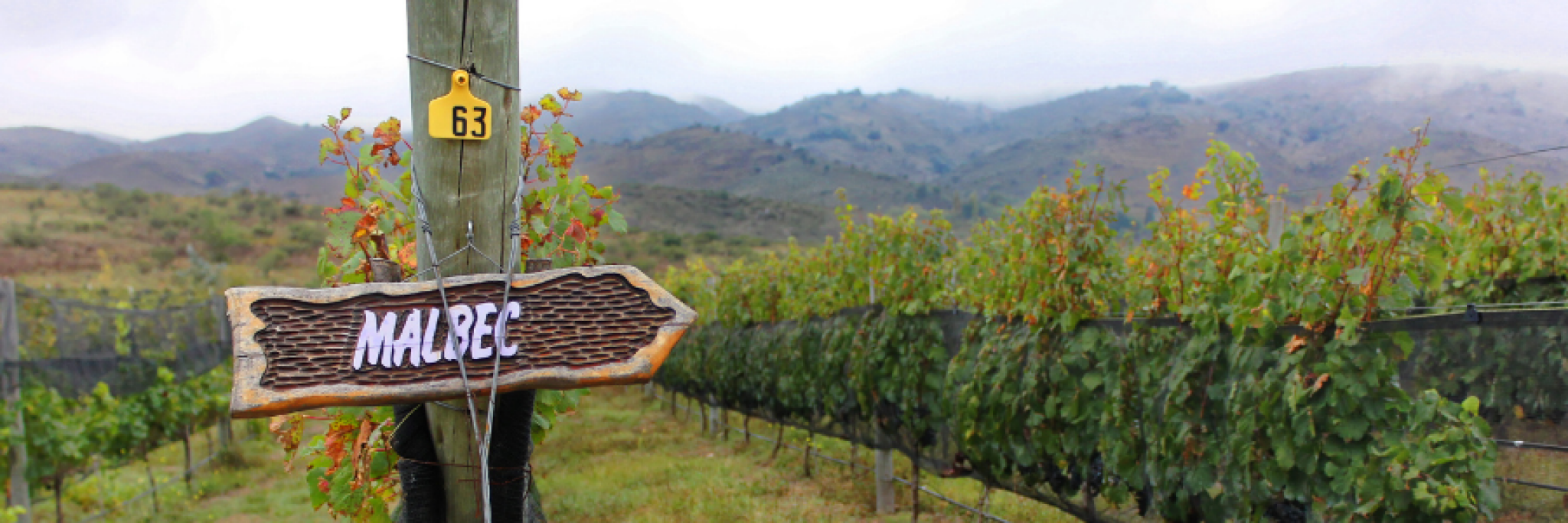
Join us to celebrate International Malbec Day on the 17th April – and throughout the whole month of April from the Peter Graham Wines portfolio. We focus on this remarkable grape and above all its adaptation and international style – developed and championed by Argentina – now one of the UK’s favourites.
Malbec was originally a French varietal, and historically one of the component parts of the blend in nineteenth century red Bordeaux. Malbec was brought to Argentina – now the world’s most famous home for the grape - in 1852, by Michel Pouget. Pouget was a French agronomist who was hired by the Argentine government to help develop their nascent wine industry - and Malbec World Day is celebrated on April 17, to commemorate the day in 1853 when the then president Domingo Faustino Sarmiento made it his mission to transform Argentina's wine industry.
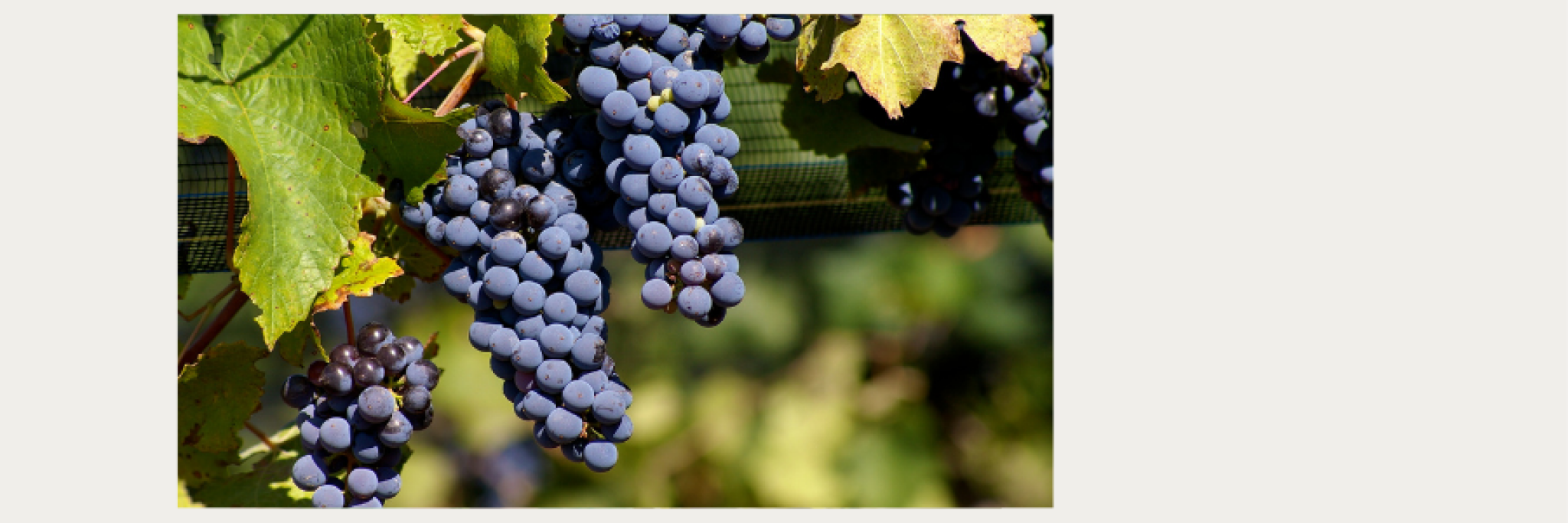
The vine was often referred to as Cot in France (which may point to origins in Burgundy!) and when disease all but wiped out the French wine industry in the nineteenth century Argentina became the only country left to have original Malbec vines of French heritage. In fact, today there is very little Malbec at all in Bordeaux and the only serious enclave left in France for the variety is in the South-Western region of Cahors, although the South of France such as Languedoc-Roussillon - (no doubt in reaction to its success in Argentina) is seeing increased plantings! And no surprise that Argentina’s near neighbour Chile is also increasing its plantings of the variety. Two excellent examples of non-Mendoza Malbec are below. The Cedre Camille from Cahors in Southwest France showcases the cooler climate (v Mendoza) style more medium bodied, with bright and supple black fruits and a touch of pepper, whilst the leading organic producer in Chile Adobe has crafted a fine Rapel Valley sourced Malbec with black berry and cherry fruit and a nice touch of chocolate.
https://petergrahamwines.com/p/cedre-camille-malbec
https://petergrahamwines.com/p/20-malbec-adobe
By contrast, Argentina’s love affair with Malbec saw plantings take off in the 1990s with over 10,000 hectares planted. Today plantings are approaching 200,000 hectares (compared to around 5,000 acres planted in the whole of France) with the vast majority of these – some 86% - in the famous, warm, central district of Mendoza. In fact, it is calculated that Mendoza is now the largest single continuous vineyard planting in the world! There are now over 1,200 wineries in that region.
Malbec is a late ripening variety (by that it requires warm weather and/or long autumns to ripen) and seems to like the calcareous, sandy clay soils which are found in the Andes. The combination of these climatic and geographic features helps to define the Argentine Malbec style, which may be described as one of mouth-filling, juicy black fruits, subtle pepper and spice, with silky tannins and even a hint of chocolate.


The Mendoza region is extremely warm and sunny receiving over 300 days of sunshine pa. It is also very dry with annual rainfall at just 25.5cm (10 inches). This does not create an issue though as it is easy to access plenty of meltwater from the Andes often via (flood) irrigation of large swathes of vineyards. The main climatic hazard the region faces is from hail – and often as they approach harvest time.
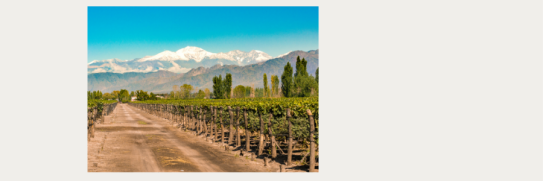
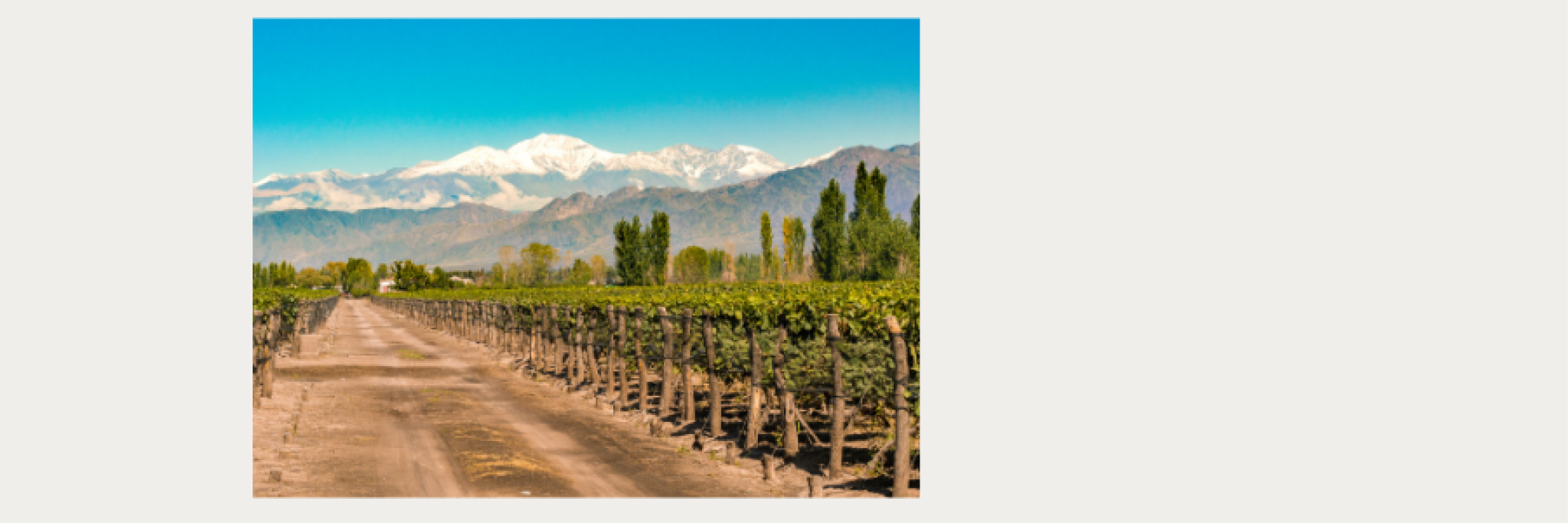
Mendoza Argentina – now the world’s most famous Malbec vineyard
Adopting the Right Altitude
The valley floor in Mendoza gets exceptionally hot in the summer (regularly more than 40˚C) which can result in heavy, alcoholic wines with low acidity, so producers have looked to grow and source more refined fruit from higher altitude, cooler sights. Such has been the progress made with Malbec in the Mendoza region that star sub regions have now been identified where superior styles within Mendoza are being produced. A number of these have been formally classified via Argentina’s DOC (controlled denomination of origin) system which protects the authenticity of these areas whilst imposing more rigorous quality demands on vine growing and winemaking.
Today, within Mendoza, the most highly rated Malbec vineyards are found in the higher altitude regions of Luján de Cuyo and Uco Valley – delimited in 1993. Other areas of note include Maipú, and San Rafael. These areas are found in the lower levels of the Andes Mountains, anywhere from 800 m and 1500 m in altitude. There is still no lack of sunshine, but this elevation (off the hot Mendoza Valley floor) prolongs the growing season (without any loss of ripeness) but lifts both the freshness (acidity) and complexity of flavour in the juice. In addition, the vineyards are in excellent health with relatively little threat from diseases – so many are naturally (quasi) organic. Wines from these areas are, in my view, worth the premium and result is a more intense flavour and aromatic quality with nuances of black cherry, sweet spice, and even some mineral notes in top examples.
The other advantage, to date, is that vineyard land is relatively inexpensive which means the wines can be competitively priced in the market. To put this into context Mendoza land costs a 10th of that in the Napa Valley. This opens plenty of scope for Malbec by the glass and given its popularity could even consider 2 options at different price points on your list.
Food Pairings
Probably no surprises here but Malbec works well with all red meats especially beef which is a tradition in Argentina – and you can extend into hearty casseroles and pies and your classical burger combinations. Works well too with a good (non-fish) Pizza. Also, roasted vegetarian dishes and ratatouille.
So, to two classic examples from Mendoza – a classic Uco Valley style from leading producers (for many the best) Zuccardi and their Apelacion Malbec which encapsulates the juicy black fruit and soft spice nature of the grape with a light lick of oak, chocolate, and minerality. Then there is the Coaba Malbec also from Uco Valley which is soft and with juicy black fruits – a great option by the glass.
https://petergrahamwines.com/p/19-zuccardi-apelacion-malbec


