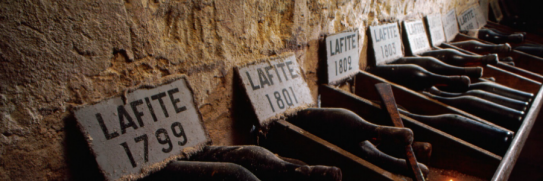
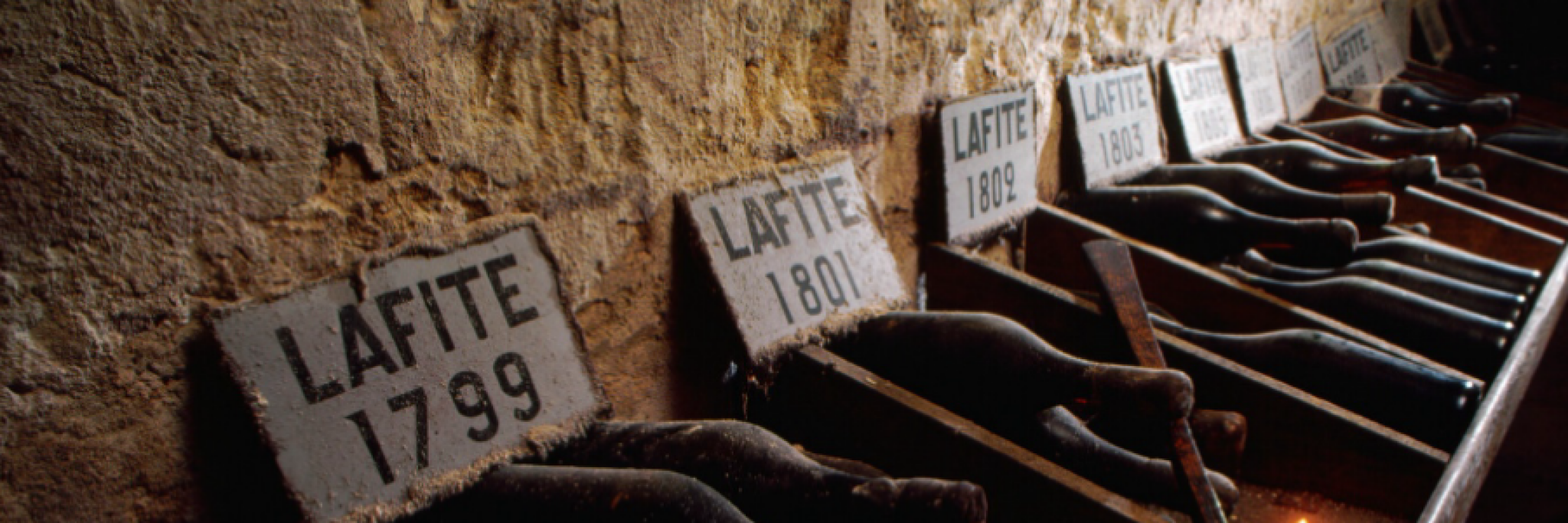
Château Lafite-Rothschild, the fabled First Growth Bordeaux – some very mature bottles here but are they still drinkable?
As we start the new year January is obviously a much quieter commercial, and increasingly “drier”, month so I thought I would tackle a slightly more academic subject matter but one which also has resonance commercially for good quality restaurant operators who have a discerning customer base – and especially if you like to devise food and wine pairing menus.
I will also finish with a selection of high quality selection of Peter Graham Wines which showcase the best of a mature wine or are in that intriguing period where they are maturing and evolving. These wines are of course very much designed to partner food.
To put this into context, it is estimated that 90% of all wines produced are made, bottled, and consumed within 2 years. Here the value of the wines’ styles is all about freshness and fruit and immediate (primary) flavours and pleasure. For a relative handful of wines, the opposite is true – these examples either demand aging (for practical purposes) or are simply much better wines for a period of maturation.
There are also important other aspects – wines from certain years may be bought to mark a birth year, anniversary, or special event – and to be opened on a suitable celebratory occasion (like an 25th wedding anniversary).
How long to keep wine, and then how much longer will it last?
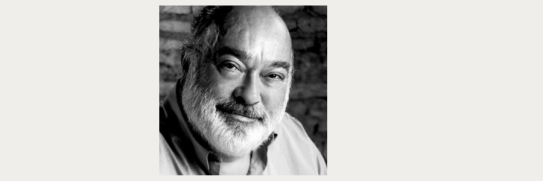
Clive Coates MW – author of “Coates Law of Maturity”
The highly respected late wine writer Clive Coates MW developed an interesting theory christened the “Coates Law of Maturity”. Although not empirically proven it has anecdotal logic and consistency. He surmised that a wine will generally remain at its peak (for drinking) for at least as long as it took to reach maturity and optimal quality in the first place. For me, and based on personal experience, there is a lot of evidence to support this – for example a top red Bordeaux taking 20-25 years to reach maturity will comfortably remain in optimal condition for at least another 25 years. This is subject to caveats of course such as storing the wine in good condition and again enjoying the style of the wine when it is much older.
And when considering “style” there are three main attribute headings which might define this process for the drinker. When a wine is young and newly bottled the aromas and flavours are often referred to as Primary – by that it tastes and smells of the freshly crushed and fermented grapes and any additional processing elements which the winemaking process has imparted. Additional elements are often referred to as Secondary, including such aspects as oak flavours and smells, or bready/biscuity notes from extended contact with yeast, or milky notes from malolactic. The flavours and bouquet associated with extended bottle aging as often referred to as Tertiary. These include examples and elements such as leather or gaminess with reds such as Cabernet Sauvignon, Merlot or Syrah based wines; mushroom for Pinot Noir and aged Champagne; honey and petrol with aged Riesling. And clearly from a personal point of view you must not only possess a degree of patience (and facilities) to age the wine in the first place but positively enjoy these tertiary flavours and smells.
Factors contributing to aging capacity
These elements might be collectively called “preservatives” in wine and include:
- Tannins (in reds) – these are antioxidants and absorb oxygen protecting precious fruit flavours and esters
- Acidity – in all wines and a natural preservative. Wines have a low pH and relatively high acid levels compared to other beverages
- Sugar – in sweet wines and another natural preservative
- Alcohol – again a natural preservative
So, a wine with high(er) levels of these components has the potential to age for a considerable time – maybe the most famous example is Vintage Port, which from a top producer in a great year requires at least 20 years in bottle to age and evolve.
As a wine ages the nature of the acidity will change. This is due to the esterification of the acids, combining with the alcohol to produce esters. These esters can be attractive in both smell and flavour. Another important aspect is the environment the wine ages in – by that in a cask (oak barrel) or in a bottle (or both) over time. When there is greater exposure to oxygen (ie in a cask) the faster wine will evolve and more “oxidative” it will become. An example of this is with aged sherry such as Amontillado or Oloroso where alcohols are oxidised to produce compounds such as aldehydes which are highly aromatic. With some wines – most famously Madeira – the production and aging process is so (deliberately) oxidative that the wine’s intrinsic character is therefore oxidative, and with this incredibly stable and long lasting as a wine. Examples of 19th century Madeira can still drink incredibly well for example.
In the inside of a bottle the environment is much more “reduced” (with no or very little oxygen) so the aging process is slowed down considerably but the potential for more complex and delicate aromas and flavours is enhanced. In fact (through gas chromatography) scientists have identified over 800 different chemical components (obviously in tiny amounts) in bottle aged wine!
With red wines the role of tannins is particularly important – these are strong antioxidants so whether in cask or bottle they act as a buffer to the intrusive nature of oxygen slowing down the aging process to help create more complex aromas and flavours over time. In addition, as the tannins themselves slowly oxidise they become “softer” in texture and eventually will fall out of solution as sediment – hence the need to decant these wines (again most famously with Vintage Port).
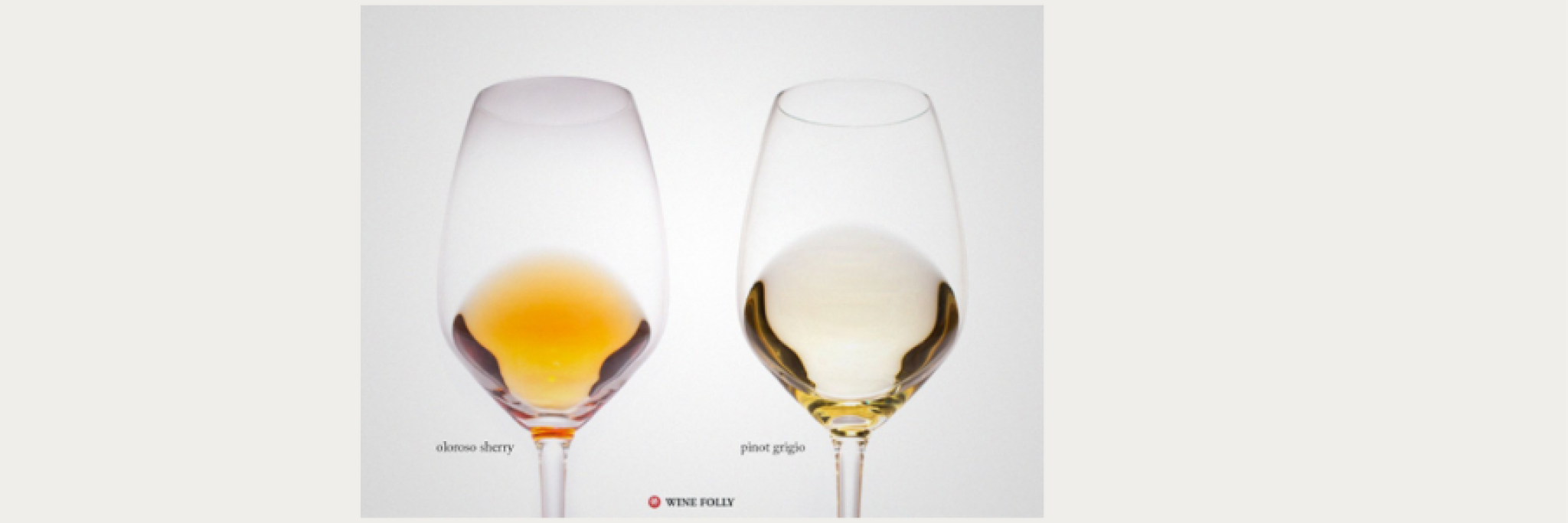
As wine ages its colour changes significantly. For both whites and reds, the wine becomes browner over time. If the wine has been aged in an oxidative environment this will be exaggerated (please see the Wine Folly ® picture of a young Pinot Grigio (made in a completely non oxidative process) versus and a cask aged Oloroso sherry of around 12 years of age).
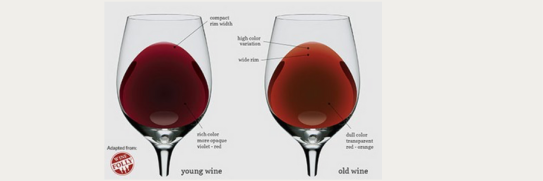
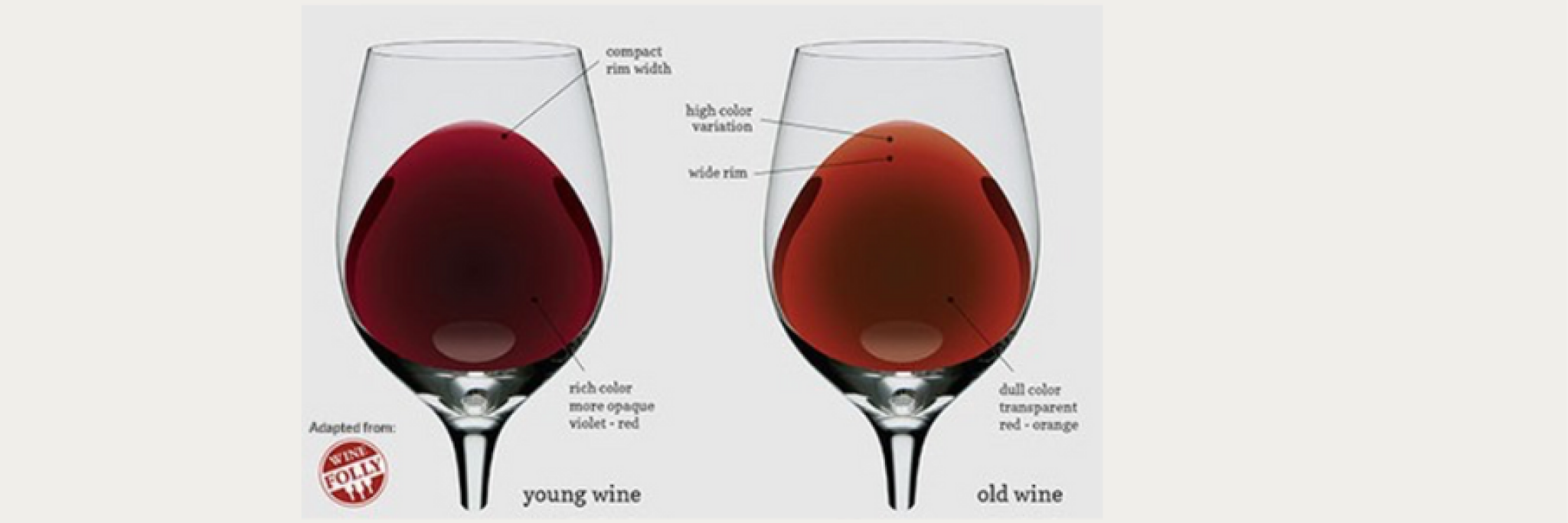
With red wine a youthful example will have deep ruby and purple colours. With age the intensity reduces, and browner (eventually tawny) colours develop. Again, please look at the very good Wine Folly ® picture which illustrates this.
However, it must be stressed that aging wine for aging sake may not guarantee any improvement. In some cases – and this has been a criticism of some New World wines – the wines age and keep well, but do not necessarily change or “improve”. They just “freeze dry” for want of an expression. And you can over keep a (good) wine and find that when you open it the aroma and flavours are just too oxidised, the volatile acid level too high, the fruit is dead.
And, very importantly, is the quality of the vintage itself. Clearly, the better the vintage conditions and year the greater capacity for the wine to age and improve both longer and to a higher level. Conversely a poorer/weaker vintage means drink up earlier.
In addition, larger format sizes – eg a 150cl magnum – are the ideal size for prolonged aging as the ratio of wine to (potential) oxygen contact is much reduced.
The other important aspect of maturing age worthy wines is how – through this process – the wine also becomes much better balanced, more concentrated, and with a longer and more precise finish on the swallow. This is fundamentally important when comparing with the same wine in its first flush of youth. Quite simply, and to take one example, a high quality young Cru Classé red Bordeaux from a good vintage is close to undrinkable when 2-5 years old and would be a waste of your money to do so. It simply demands to be aged.
Of course, other elements are vitally important in a wine’s capacity to age and improve. Quite logically the better the vineyard it originates from, and the more highly skilled and reputable the producer is, will impact significantly on the quality and durability of the wine. Add in it being produced in an outstanding vintage (conditions) and the template is plainly there for a long maturation programme. This is especially relevant in a region such as Burgundy where there are a kaleidoscope of formally classified vineyards and a multitude of growers with diverse reputations.
There is also the aspect of grape variety to consider. Certain grapes, such as Cabernet Sauvignon, genetically possess the attributes to age well, with naturally high levels of tannin and acidity. Also, if crops of any varietal are significantly reduced this will lead to greater concentration of the juice in the grapes and potential for a finer and age worthy wine from these. And older vines tend to produce fewer grapes of greater concentration – all these things come into the mix.
Examples of aging in specific wines
As said liking the style of an older wine is very much a personal matter. To give you a few practical examples below – subject to good storage and vintage as mentioned:
- Young v Aged Champagne
Champagne is an interesting example in that most top houses non-vintage Champagnes already have significant aging – including a proportion of reserve wines which could over 10 years old and then 3 years bottle aging on lees prior to release. But in essence a new release Champagne will be crisper, with apple, stone fruits and/or red berries with a bright toasty, brioche character. Older mature examples will be more golden in colour, less overtly fruity, the toasty character will be more exaggerated, and notes of mushroom and honey could have well evolved.
- Young v Aged Pinot Noir
Apart from the colour change the flavour and aromas profiles change from bright cherry and red berry fruits, with a touch of cinnamon to earthier notes (sous bois), some mushroom and a savoury/umami fruit and flavour profile.
In fact, to summarise, in one word wines which age well and evolve tends to be more “savoury” as well as complex.
General aging properties of some selected wines which have the capacity to mature and improve (from release) – will vary by quality of vintage and style of individual producer of course
Again, subject to vintage and storage the following are hopefully a good guideline:
- Bordeaux Cru Classé (red) – 10-50+ years
- Bordeaux top Sauternes – 10-50+ years
- Burgundy Grand Cru Red – 10-25+ years
- Burgundy Grand Cru White – 5-10+ years
- Châteauneuf-du-Pape Red – 8-20 years
- Gran Reserva Rioja – 5-20 years (another good example of a wine which is released already with considerable aging. By law, all Gran Reserva Rioja must be at least 5 years old (mix of cask and bottle) prior to release – hence the colour changes too versus a younger wine
- Barolo/Barbaresco – 5-15 years
- Chianti – 5-15 years
- Champagne NV – 2-5 years
- Champagne Vintage 5-30+ years
- Top German Rieslings 5-50 years
- Top Australian Shiraz 5-25 years
- Top New World Bordeaux Blends 5-20 years
- Vintage Port 15-50+ years
The surprise to you maybe the ageing potential of some white wines. What links Chenin Blanc and Riesling from top sites and producers in The Loire and Germany respectively is that the acid levels are so high that this provides the foundation for long aging in the best examples. This can also be enhanced for the same wines if they are made in a sweeter style and the sugar preservative element also kicks in. This applies too classically with top Sauternes.
In summary, do not fear indulging in stocking special and older bottles of wine. I think mature and finer examples on a wine list add both kudos to your establishment and elevate your food and wine pairing options. It also allows for a regular customer to indulge when celebrating a special occasion. Peter Graham Wines are here to help and advise too in that selection process.
Above all be sure that you enjoy the tertiary flavours that will evolve and then …. you’re off! Nothing quite beats the experience of opening and sharing a special, evolved, bottle of wine.
To finish with a fine selection of wines from the Peter Graham portfolio. To highlight a few stand outs:
- There’s a superb Grand Cru Classé Margaux from Château Giscours now evolving perfectly into its drinking window as it passes its 10th birthday
- A fine Savigny Premier Cru now entering its 8th year from the excellent Domaine Jean-Jacques Girard, with those tertiary Pinot Noir notes just starting to emerge
- Compare two classic Syrah/Shiraz with bottle age the excellent Jaboulet Hermitage and the benchmark Jim Barry Mcrae Vineyard Clare Valley contrast
- And a pedigree 8-year-old vintage Champagne from Taittinger, then finish with
- A fully mature, honeyed Sauterne from top Cru Classé Château Rieussec
- And two contrasting ports – Graham’s single vineyard Vintage Port and the amazing ultra savoury Barros Colheita single vintage (1974) aged reserve tawny


